
APC Diagnostics & Remediation
We don't ask how you got there. We get you out.
When an installed APC system underperforms — counts that won't reconcile, assignment failures, growing data gaps — UTA identifies the cause and fixes it, usually on the hardware already on the vehicles. The work is diagnosis, engineering, and documented validation.
01 / Failure modes
Underperforming APC systems fail in recognizable ways.
These are the failure modes we are asked to fix most often. None of them means starting over, and each has a technical cause that can be isolated and corrected.
Counts that don't reconcile
APC totals diverge from manual ridechecks or farebox baselines — and the divergence isn't constant. It moves by route, door, and time of day, so a flat correction factor won't hold.
GPS and stop-matching errors
Boardings assigned to the wrong stop: GPS error in dense corridors, stale stop inventories, or matching tolerances set wrong for the stop spacing. A correct count at the wrong stop is still a wrong answer.
Block assignment failures
Records that can't be matched to the trip and block the vehicle actually operated. Interlining, block swaps, and detours break naive matching — and unmatched records silently drop out of reports.
Sensor alignment and occlusion
A sensor mounted at the wrong height or angle miscounts systematically — at specific doors, under crowding, with certain doorway geometry. The error doesn't average out; it accumulates.
Data gaps from connectivity or power
Interrupted transmission, weak cellular coverage at the garage, or power faults leave holes in the record. Untreated, missing days bias every total computed over them.
Records that fail validation
Data is collected but fails validity checks and never reaches a report. The usable sample shrinks, and the numbers that survive stop being representative of actual service.
The complete job
Diagnosis through daily operation, under one roof.
UTA takes the system from first diagnostic to daily operation — hardware, processing, reporting, and support — and stays responsible for the result. An agency can engage UTA for a single step below, but the capability behind every engagement is end-to-end.
02 / The work
Diagnose. Remediate. Validate. Operate.
The same engineering discipline behind 125+ formal APC accuracy evaluations, applied to a system we didn't install.
03 / Keep the hardware, fix the data
You may not need new sensors. You need counts that hold up.
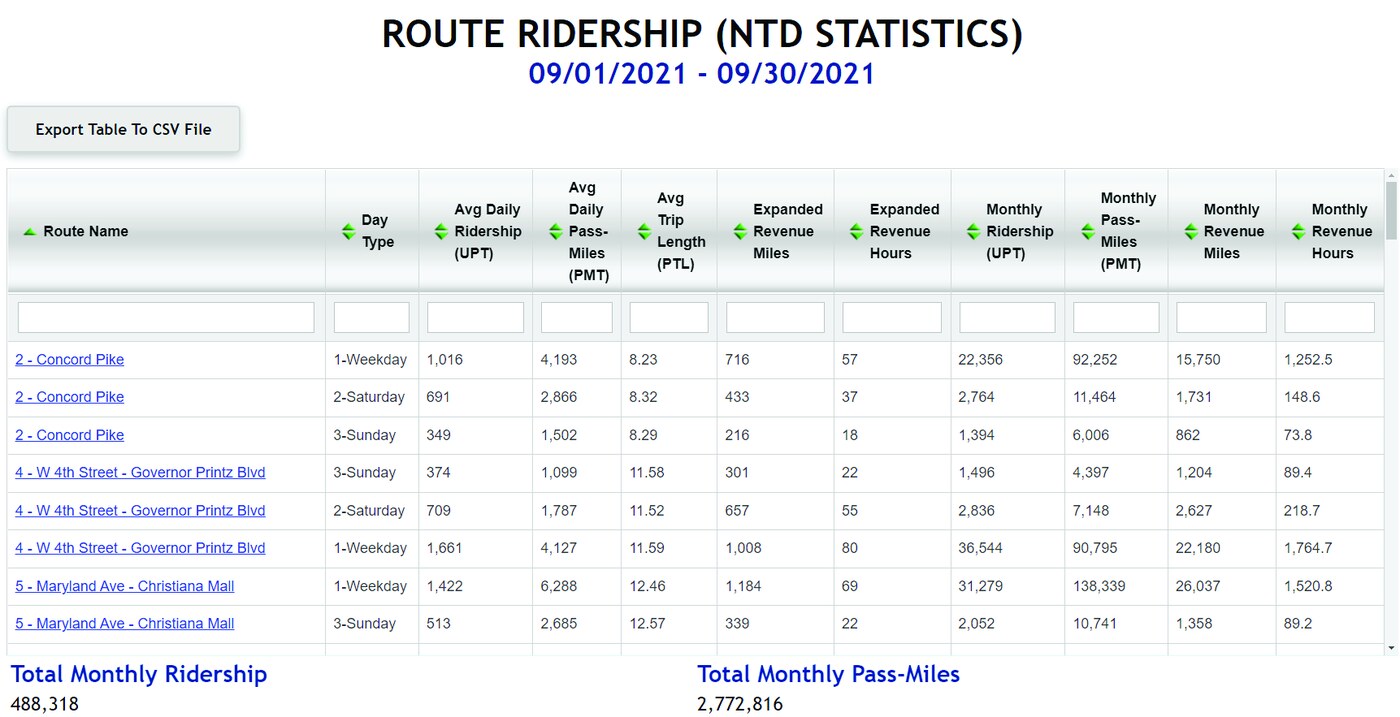
UTA APC software is frequently implemented at agencies that don't have UTA equipment on a single vehicle — because processing, diagnostics, and reporting are where accuracy is won or lost.
Processes APC data from non-UTA counting systems
Works with virtually all AVL and scheduling systems
Five-step overnight pipeline with data-validity checks at every step
60+ analytic and administrative control reports
04 / Why agencies call UTA for this
The team that's seen every failure mode
APC is all we do
UTA is the only firm in the U.S. that solely specializes in high-quality APC systems. Passenger counting isn't a module in a larger ITS suite here — it's the entire company, since 1981.
Hardware and software under one roof
Because UTA engineers both the sensors and the analytics, we can trace a bad count from the doorway to the database — and know which end of the system to fix.
125+ accuracy evaluations of experience
Across 30+ years of APC applications, accuracy evaluations have taken place at every UTA site. Diagnosing a counting system is not new territory — it's the day job.
Validation that has held up
Every UTA APC user that has applied to use APC data for U.S. NTD ridership reporting has received FTA approval. That is the standard the work is finished against — wherever the agency reports.
Diagnostics & Remediation
Start with measurements.
A remediation engagement begins with data: ridecheck concurrence, per-door analysis, a review of the raw stream. Whatever is on your vehicles today, the target is the same — counts accurate enough to defend, delivered every morning, for the next decade.
Diagnosis / remediation / documented validation / long-term operation
Tell us what the system is doing.
Describe the symptoms — what won't reconcile, where the gaps are. An engineer will follow up, usually the same day.